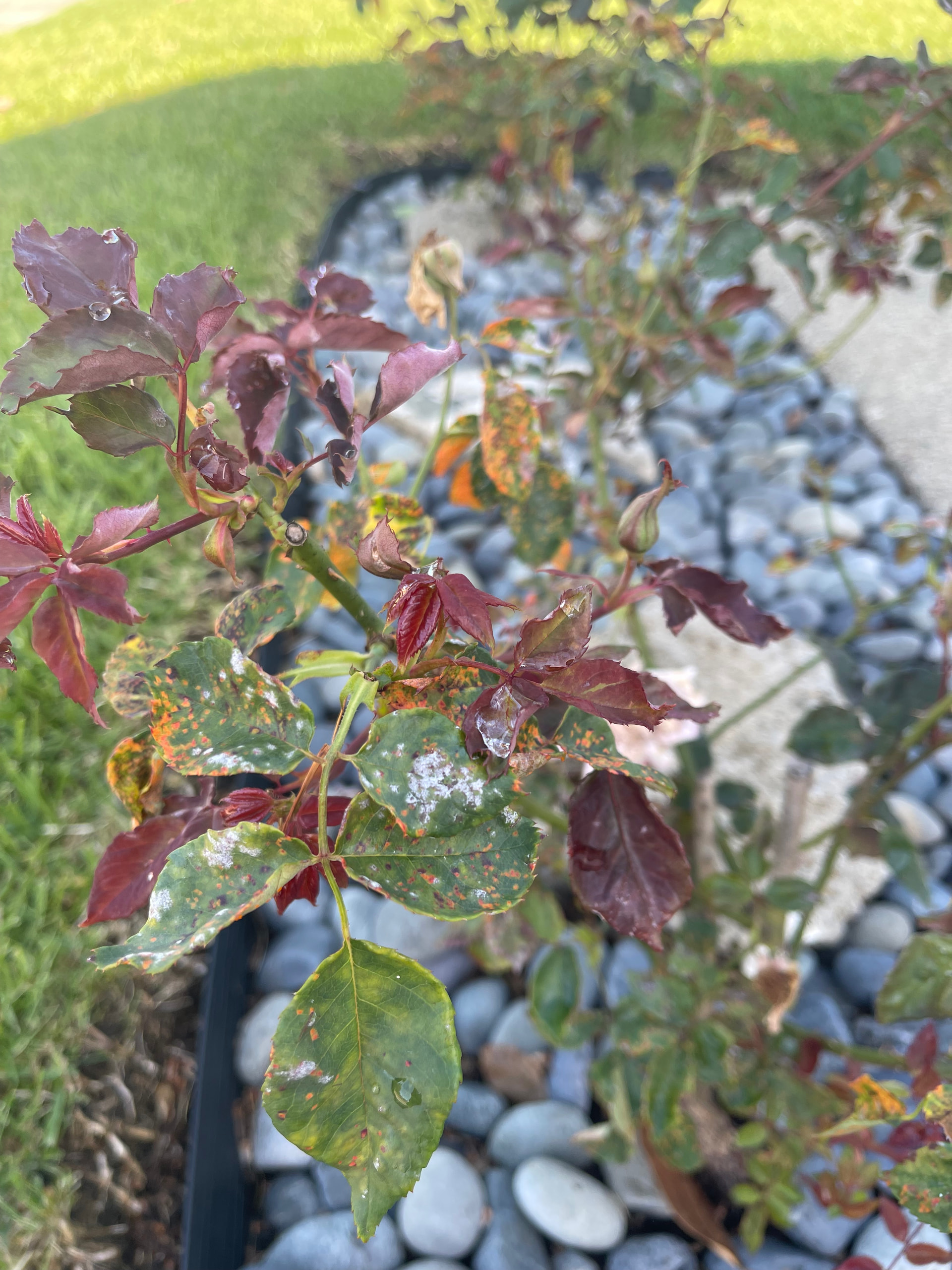
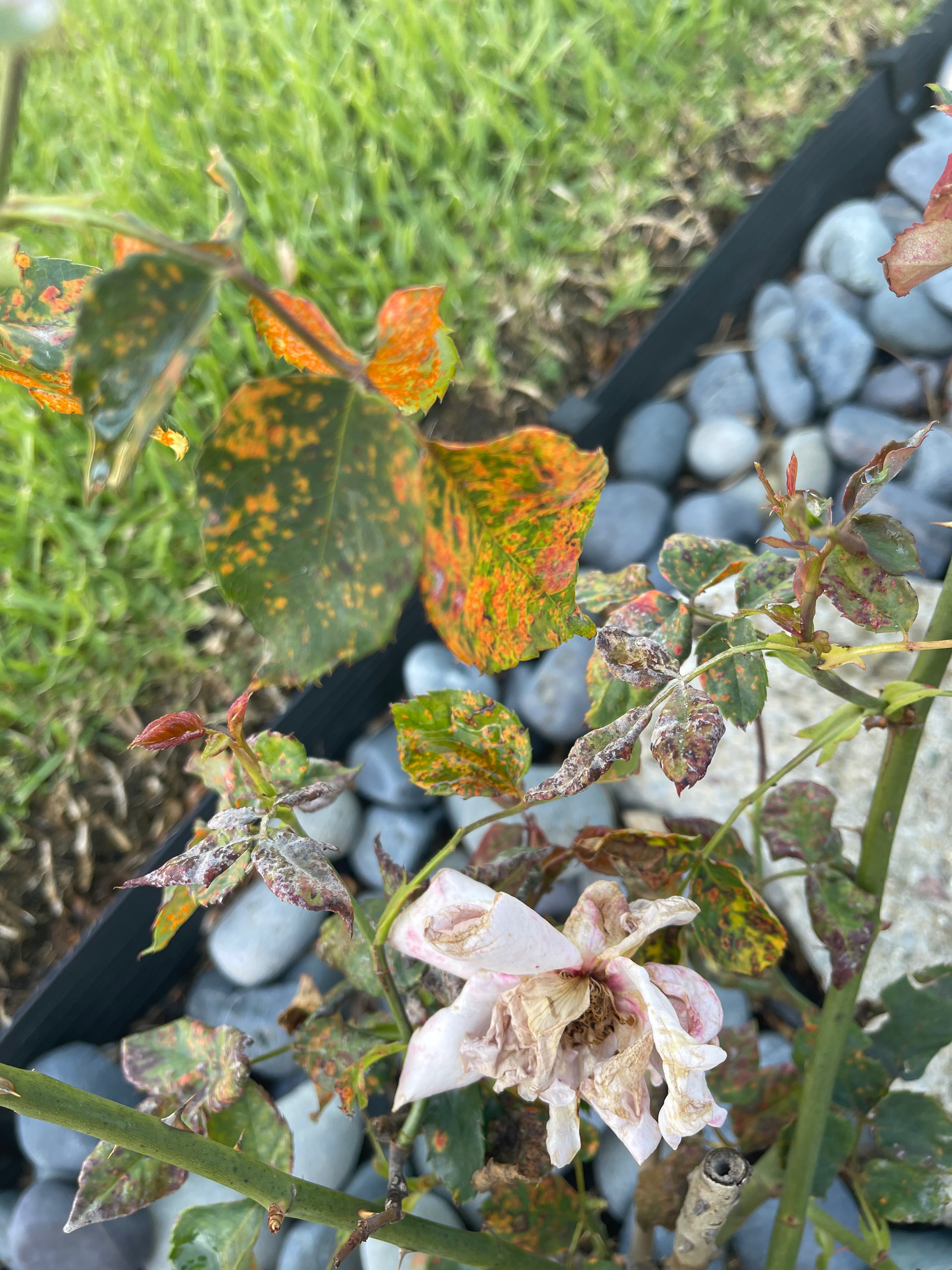
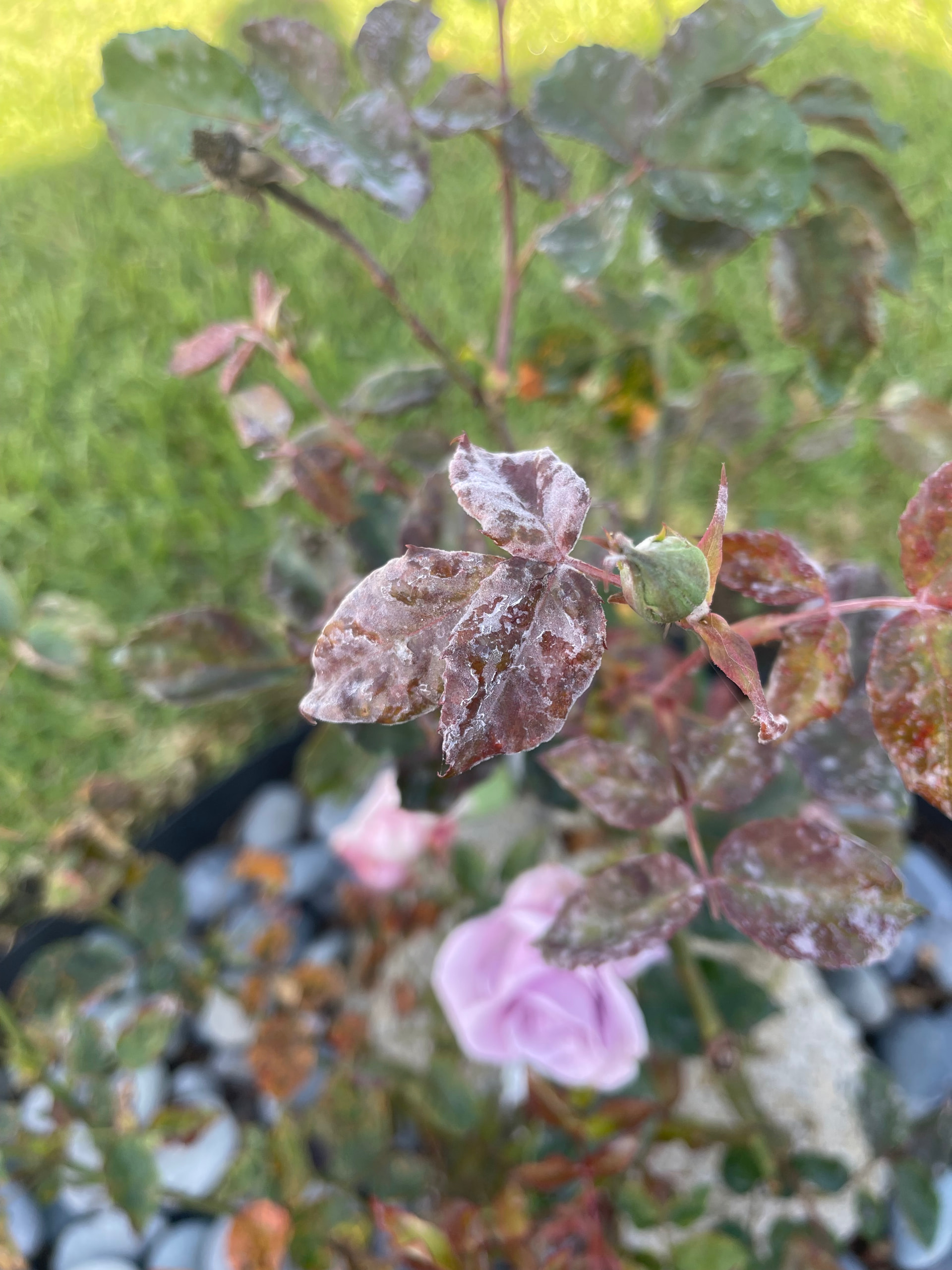
Three Sterling Silver roses are having multiple issues. I’m not sure what the issues stem from. I believe they have at minimum rust and mildew. They are 3 years old. In Bay Area CA, facing west, have sun about 8 hours, plenty of draining water. They still bloom nicely.
1 Like
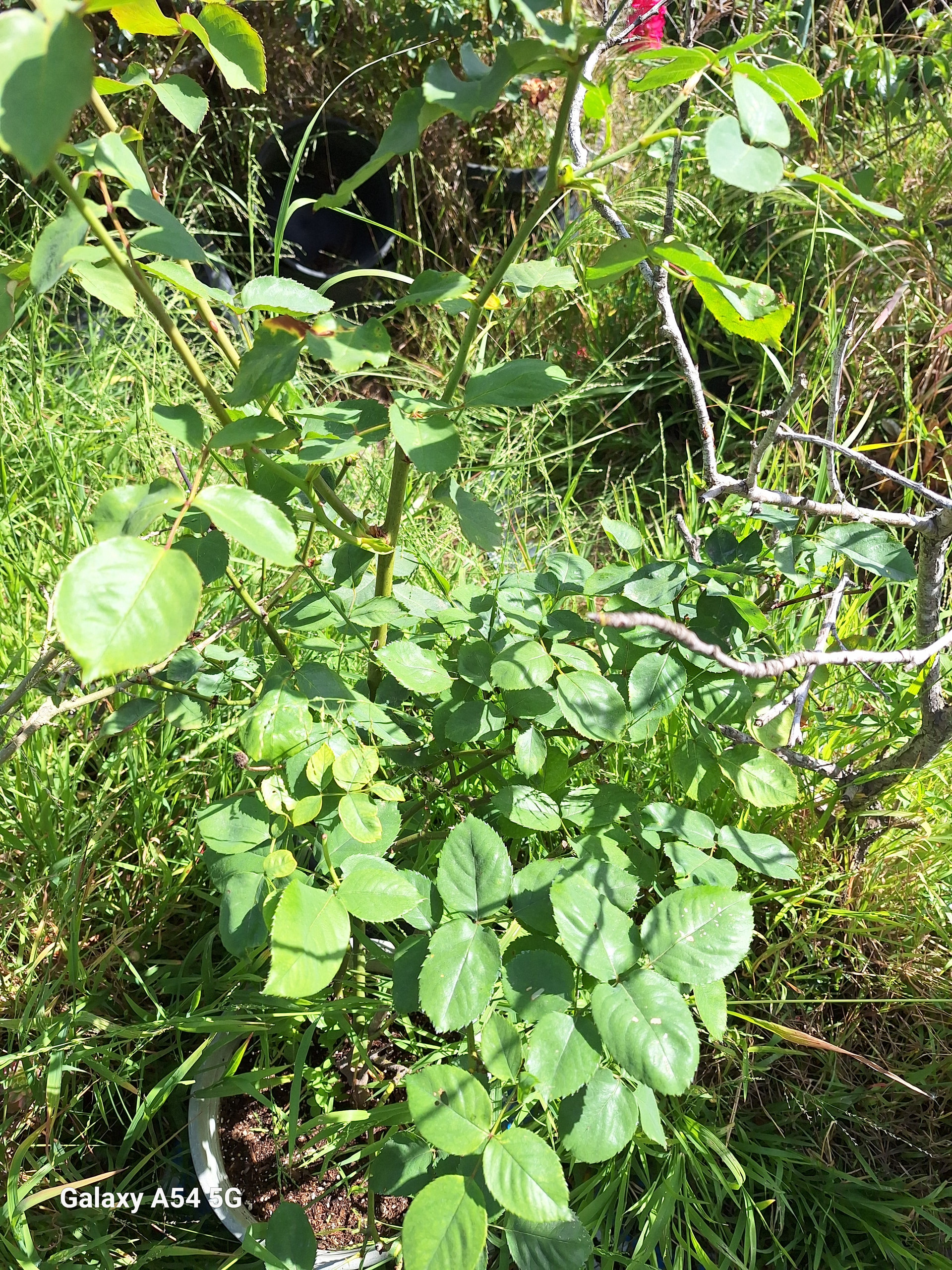
The fungal issues appear to be mainly on last year’s foliage, which is completely normal. I see obvious rust, possible mildew and definite hard water spotting. If it offends you, pull off the damaged foliage, water the plants well and continue with your fertilizing schedule. I’m in Santa Maria, a few hours south of you. This is Sterling Silver in the back yard now. I don’t spray anything. I have to grow everything in cans due to engineered soil and invasive tree roots and I can only fertilize with Miracle Gro Liquid as the dogs EAT everything. Between the dogs, raccoons and opossums, I can’t use anything organic as that is FOOD. You will see slight saw fly larvae damage on the foliage in my photos, which will subside once the heat rises a bit more. Remove the old foliage and keep them appropriately watered and fed. Sterling Silver isn’t a very vigorous variety and its health has always been subpar, but the scent, color and legend keep it going.
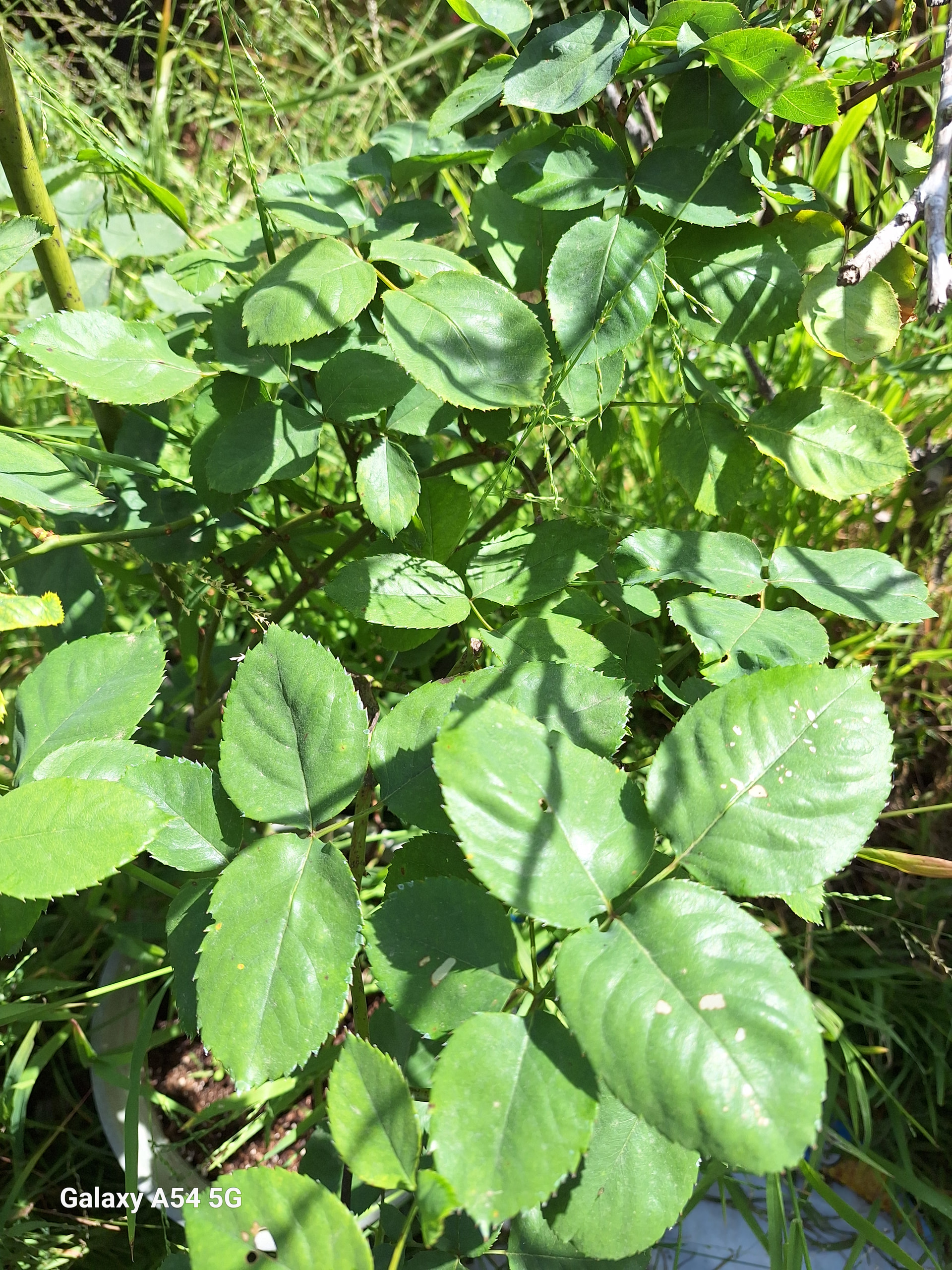
2 Likes
Thanks so much for the detailed insight on the Sterling Silver roses. I’ll keep working through the process and see how they respond over the next stretch. With any luck, they’ll hit that turning point where they start to look more settled in and less like they’re fighting for their lives. These older hybrid teas can be dramatic, but I’m hoping consistency and patience will coax them into looking like proper, established plants.
1 Like
You’re welcome. Be steady with the fertilizer and water and you’ll love Sterling Silver.
What have you done to control the mildew and especially the rust?
I’ve been remiss in removing the affected leaves because I don’t like the rose constantly looking dead, and I’m trying to not use chemicals. The airflow isn’t an issue, and watering happens early in the day before the sun rises.
1 Like
Your rose is not one of the most disease resistant roses. Would you consider using some of the organic or biorational controls? Rust is difficult to control without spraying anything. Look at the new organic fungicide under the Magic Gardener label. It should be labeled for use in California already or shortly.
1 Like
Maybe some Bonide fungicide or Bioadvanced Rose & Flower Care.
1 Like
Bonide’s Mancozeb is no longer being manufactured, but if you can find it buy it. The BioAdvanced product will help. Have you contacted your local rose society and asked a Consulting Rosarian for some recommendations?
1 Like
Although Roseseek’s SSilver looks beautiful, I must confess that I had to give up on my sterling silver. The plant just had no vigor at all and caught diseases not even invented yet. to my mind it is a prime example of the fact that not all plants are perfectly bred. I wouldn’t bother with it. Treat yourself to a really nice plant like a Double Delight or such.
2 Likes
Agreed, some varieties demand “high culture” where many others are literally the “plant and forget” types. I’m not disparaging either nor anyone who selects one or the other. There is room enough for every type of plant and every type of rose grower. Not every variety is suitable for everywhere, either.
2 Likes
I’ve had a Barbra Streisand hybrid tree and a Bewitched hybrid and those are magnificent examples. I’m still hopeful for the Sterling silvers - they are an amazing color flower.
1 Like
I don’t blame you. I’ve seen an original plant from the original introduction of Sterling Silver. A gentleman I had met through roses took me to an old school mate of his, home in Los Banos, CA who had purchased a Sterling Silver from Jackson and Perkins in 1958 and planted it at his home. I saw it in the mid 1980s. The plant was gorgeous! It was still nearly 5’ tall with beautiful foliage and large lavender, heavenly scented flowers. The only other Sterling Silver plants of that quality I’d seen were budded crops in the rose fields in Wasco, CA. My plants are propagated from UC Davis Foundation Plant Services virus indexed stock, so they are “virus free”. My goal is to push them to produce suitable material for me to be able to bud them to indexed root stock. It demands a good root system under it to perform as expected. Sterling Silver was introduced budded and was never meant to be an own root plant. The original ARS annual description of the variety described tall plants with large flowers. I know it CAN be that and I WANT that in my yard. So, I’m with you!
2 Likes
I just noticed the rocks you have around this rose. It will radiate heat and may negatively impact the growth of your roses. Some type of shredded hardwood mulch would be better.
2 Likes
Good catch, @Rosejoy! Absolutely! While rocks last forever and can help suppress weeds, they are also passive solar collectors, absorbing and radiating heat for hours after the sun moves from shining directly on their surfaces. That added heat can be beneficial…IF controlled and directed to alter the temperature to help ripen fruit, such as the plastic mulches used in berry fields to warm the soil and help make the berries sweet (in addition to saving water and preventing weeds and bugs) or helping to prevent frosts to protect frost sensitive plants against masonry walls in harsher climates. But, here, they can over heat the soil and cook the rose’s feeder roots which are just under the soil surface. If you’re familiar with the Los Angeles Arboretum, there used to be Dr. Walter Lammerts’ “Rose History Walk” which was a huge rose collection, planted to illustrate how roses developed from species to modern day. The powers that be, decided that weeding and replacing organic mulches had become too labor expensive, so they had the “great idea” of replacing the mulch with cinder rock. The stuff used in gas grills to absorb and radiate heat for COOKING, and that’s precisely what happened to the rose roots in that garden. They suffered and languished until it was all destroyed and replaced by a new version of what the Guild decided was required. Your rocks can cook the soil under and around them, killing the soil bacteria and fungi as well as insects which help break down organic material to feed the rose roots. What’s left is pretty much dead clay and/or sand, depending upon the original composition of the existing soil. Your roses need a steady diet of organic material, mulch, replenished annually (at least) to replace that which is broken down in normal “digestion” by the soil populations which eat it to release nutrients to feed plant roots. That organic mulch also conditions the soil to provide for drainage, allowing the dissolved nutrients of the mulch to flush through the soil, bringing oxygen and flushing out carbon dioxide “exhaled” by the plant roots. I know it won’t be as “pretty” as those gray river rocks, but an organic mulch of something like shredded cedar, liberally applied in their place and maintained annually should help improve their look and performance dramatically.
1 Like