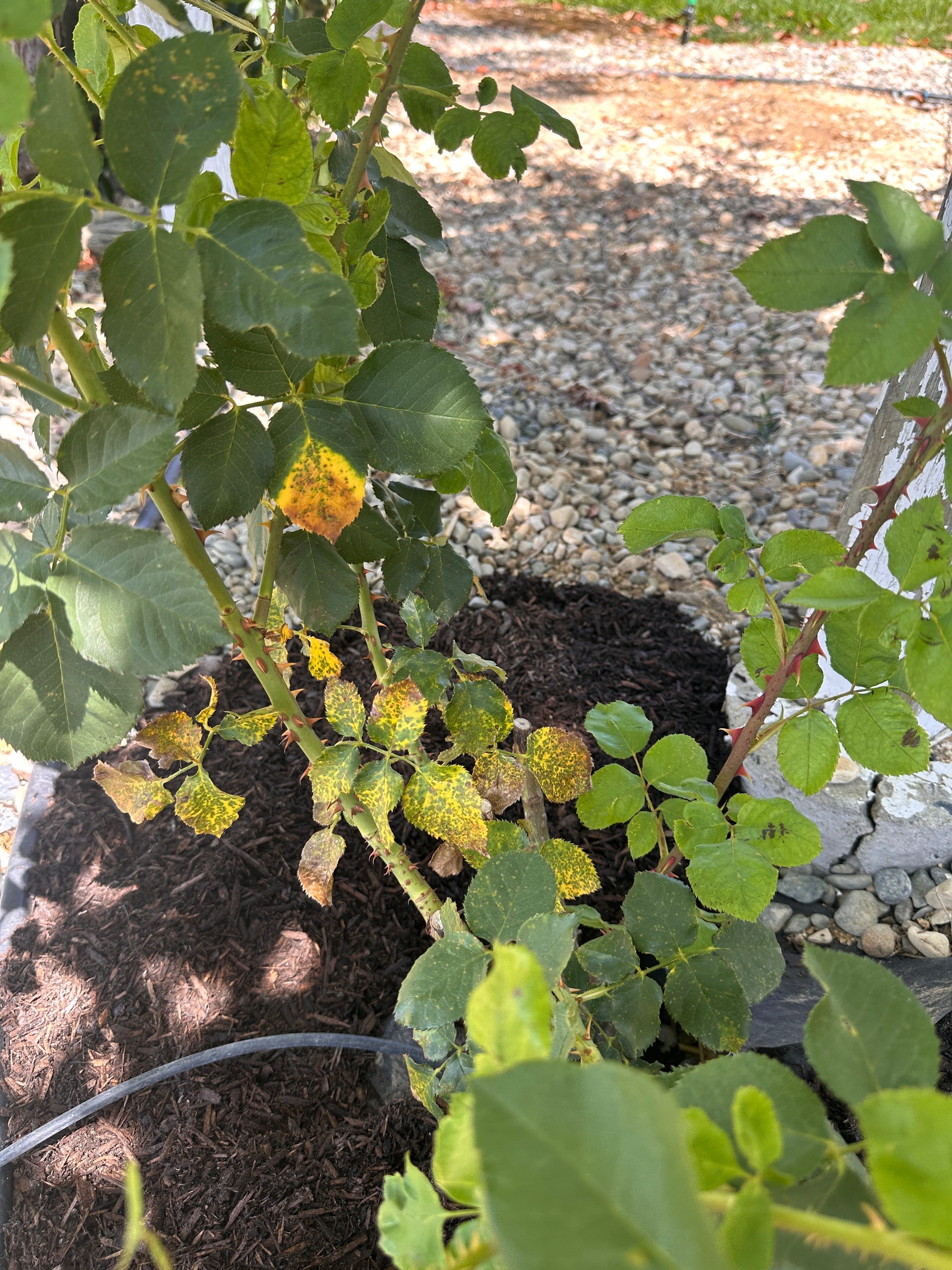
Joseph’s Coat has yellowing leaves. Is it rust? How do I treat it?
I am a rose newbie is zone 9b California.
I planted 20 roses this year and am trying to keep them healthy.
<div data-theme-slick="1"Joseph’s Coat has yellowing leaves. Is it rust? How do I treat it?
I am a rose newbie is zone 9b California.
I planted 20 roses this year and am trying to keep them healthy.
<div data-theme-slick="1"Welcome, Jenn! Which 9b California are you in? I’ve grown roses in the low desert 9b Santa Clarita Valley; inland valley heat 9b San Fernando Valley and now cool, damp coastal 9b northern Santa Barbara County and, while they have similarities, they are rather different from each other. Generally older leaves yellowing isn’t always a negative sign. As the plants grow, new shoots shade the older leaves, reducing the light they can absorb. Once they reach the threshold of requiring more resources to be retained compared to the resources they provide through photosynthesis, the plant begins absorbing the sap from the older foliage, turning it yellow in the process, before shedding it. Often, fungal issues such as rust and black spot attack the older foliage as the sap is removed, helping to trigger the plant to shed it. Those inverted “V” shaped yellow spots can be due to excessive heat while the yellowing foliage at the bottom of that cane does appear from the photo to be rust. If you prefer not to use chemical intervention (no judgement), pick off the diseased foliage and keep the plants properly watered. If it’s hot where you are, you will need to increase the water amount and frequency during the heat spell. Water stress can easily force a rose to rust (and mildew). Even resistant types can literally be forced to contract fungal diseases through water stress. If they continue rusting, even when the water is appropriately increased, then it’s time to decide whether that variety simply isn’t sufficiently rust resistant for your conditions and whether it’s worth using chemical intervention or replacing it with a variety with greater rust resistance. That choice is yours to make as it’s your garden, time, energy, money and potential chemical exposure.
I didn’t know you could force roses to rust until I accidentally did it. I had a potted R. Arkansana which had burst into gorgeous, new spring growth. It was beautiful and completely healthy. I missed watering it back in the hot Los Angeles climate and it contracted rust from the new growth tips to the bottom of the canes. I removed the rusted foliage and began watering it copiously. It burst into new, clean foliage. I decided to experiment, so I dried it out again, and it once again rusted from top to bottom. I removed the foliage and started watering it regularly. It leafed out again and remained healthy until fall when it predictably rusted.
Arkansana is rather “Arctic hardy” and healthy where it’s indigenous. Spring rains and increasing sun and heat bring it from winter dormancy into gorgeous spring growth and flowering. As summer wears on, the ground water begins to dry up, triggering the plants to rust. The rust helps trigger the plants to begin shedding the foliage and harden off in preparation for the coming winter freezes. It’s natural that water stress should force them to rust. It’s part of the symbiotic evolution in Nature. So, the first thing to check should be that the rose is receiving sufficient water. If it is, and it continues to rust, then you can choose to either treat it or replace it. Good luck!.
Thank you so much for your reply. I am in Paso Robles and it’s been warm/hot.
How much should I be watering my new roses?
You’re welcome. What’s your drainage like? Are you on engineered soil or native? If it’s sandy, you’ll need to water heavier and more frequently. If you’re on more decomposed granite, the drainage is slower and moisture retention is higher. If you’re in a home built in more recent years, your soil may be more compacted, slowing drainage. That answer helps determine amount and frequency. Generally, I’ve always read roses enjoy an average of an inch of rainfall over their root zone weekly. But, if you’re on sand, they’ll need much more than that, much more frequently. If you’re on engineered soil, they’ll need much less, less frequently.